

Foreword

The OCC Copper & Why the ‘Purity’ of Most Copper is a Misleading Metric
The industry talks endlessly about copper purity, quoting strings of nines as proof of quality. But this is only half the story. The truth is, the true bottleneck in a conventional high-purity copper wire is not the microscopic impurity; it is the microscopic chaos of its crystal structure.
A standard copper wire is composed of countless individual copper crystals, or “grains.” As the audio signal travels, it must cross the boundary from one grain to the next, thousands of times per meter. Each crossing is an impedance jump, a microscopic barrier that causes distortion, signal loss, and a subtle but pervasive harshness known as “grain”.
Our solution is to eliminate the roadblocks. We use Ohno Continuous Casting (OCC) copper, a process developed by Professor Ohno in Japan. By slowly drawing the copper from its molten state, the process creates a wire with a single crystal structure that can be over 100 meters long. There are virtually no grain boundaries to impede the signal. We utilize the highest purities available—N6 (99.9997%) and N7 (99.99997%)—but it is the structural integrity that makes the critical difference.
The result is a conductive pathway of astonishing purity and continuity. The signal flows through an unbroken, uniform medium, free from the distortions of grain boundary crossings. The sound is effortlessly clear, coherent, and free from the artificial “edge” that plagues lesser conductors.
Silver-Plating & The Misunderstood Brilliance of Silver
In audio circles, silver has earned a reputation for being "bright," "analytical," or "harsh." This is one of the great misunderstandings of high-end audio. Silver is not inherently bright; poorly engineered and poorly applied silver is.
This is not a matter of opinion; it is a matter of physics. Due to a phenomenon known as the "skin effect," high-frequency currents travel almost exclusively along the surface of a conductor. When a copper wire is plated with silver, those high frequencies are, for all practical purposes, traveling through a solid silver conductor. The quality, purity, and uniformity of that plating are therefore not details; they are everything.
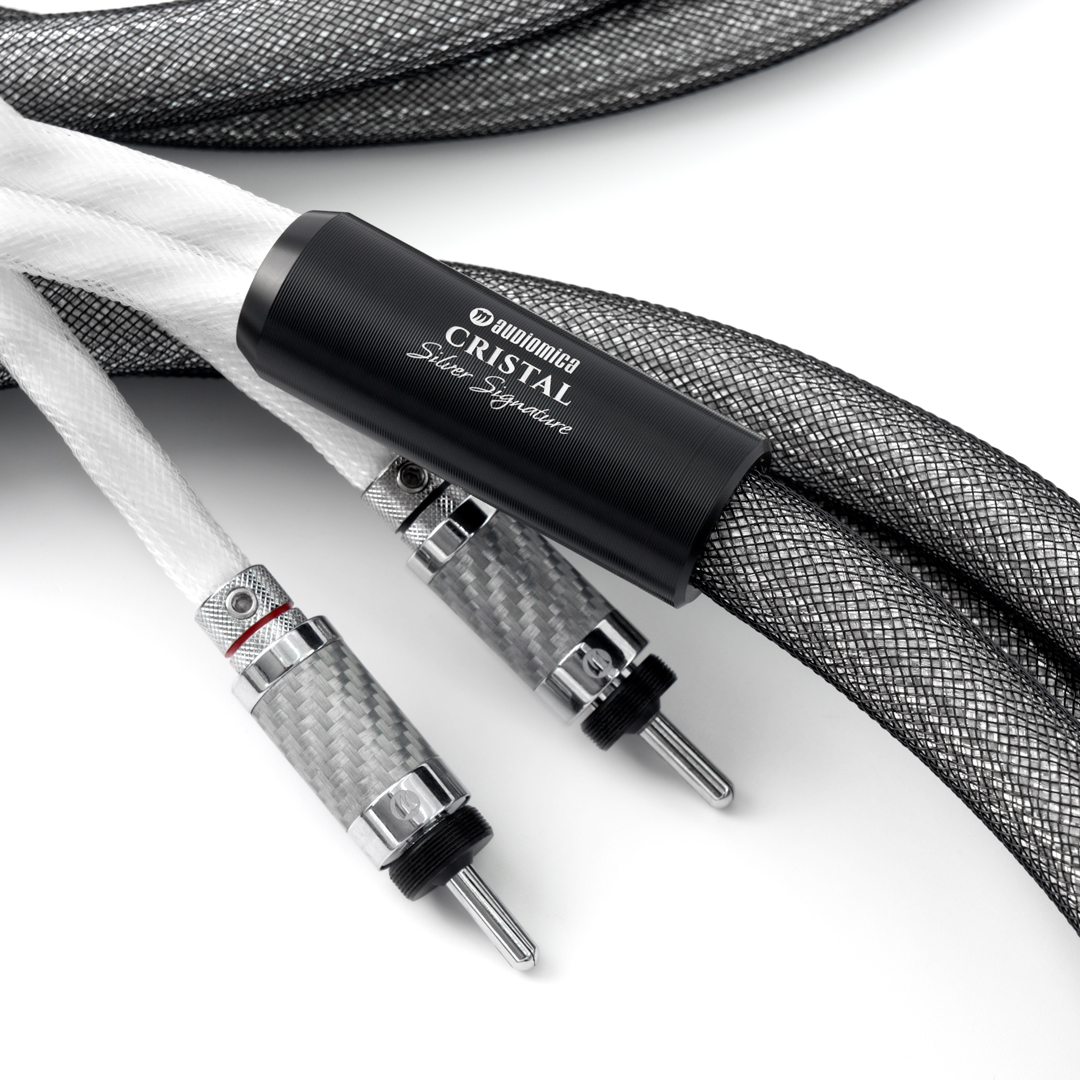
We use only high-purity electrolytic silver (Silver-HG) and apply it using our patented Double Coating Process (DCP). This ensures a thick, flawless, and perfectly bonded layer that is electrically and mechanically superior to any standard plating method. In our top-tier designs, we use solid silver conductors, chosen for their unmatched conductivity and resolving power.
When engineered correctly, silver delivers unparalleled transparency, speed, and resolution. It reveals the finest textures and spatial cues in a recording with breathtaking clarity. It does not add a character; it removes a veil
Silver-Plating & The Misunderstood Brilliance of Silver
In audio circles, silver has earned a reputation for being “bright,” “analytical,” or “harsh.” This is one of the great misunderstandings of high-end audio. Silver is not inherently bright; poorly engineered and poorly applied silver is.
This is not a matter of opinion; it is a matter of physics. Due to a phenomenon known as the "skin effect," high-frequency currents travel almost exclusively along the surface of a conductor. When a copper wire is plated with silver, those high frequencies are, for all practical purposes, traveling through a solid silver conductor.
The quality, purity, and uniformity of that plating are therefore not details; they are everything.
We use only high-purity electrolytic silver (Silver-HG) and apply it using our patented Double Coating Process (DCP). This ensures a thick, flawless, and perfectly bonded layer that is electrically and mechanically superior to any standard plating method. In our top-tier designs, we use solid silver conductors, chosen for their unmatched conductivity and resolving power.
When engineered correctly, silver delivers unparalleled transparency, speed, and resolution. It reveals the finest textures and spatial cues in a recording with breathtaking clarity. It does not add a character; it removes a veil.
Teflon (FEP) & The Insulator’s Paradox: To Protect, It Must Disappear
Every insulating material, or dielectric, that surrounds a conductor is an imperfect system. As the signal passes, the dielectric absorbs a portion of its energy, holds it, and then releases it slightly out of phase. This process introduces distortion, smearing fine details and robbing the music of its timing and pace.
Many manufacturers use PVC because it is cheap and flexible. Sonically, it is a poor choice, with high energy absorption that audibly colors the sound. The perfect insulator is a vacuum. The best practical insulator is air. This is the principle that guides our engineering.
In over 99% of our cables, we use a superior form of Teflon called FEP (Fluorinated Ethylene Propylene). It has exceptionally low energy storage and a very high resistance to all forms of degradation. But we take it a crucial step further. Through a specialized extrusion process, we introduce countless microscopic air bubbles into the Teflon itself. This creates a composite dielectric that is part Teflon, part air.
In effect, the conductor is suspended within an insulator that has the properties of air, the ideal dielectric. The material’s own sonic signature is reduced almost to the vanishing point. The result is a sound stripped of the insulator’s influence—utterly neutral, agile, and transparent.

The Last Inch: Where Most Signals Falter
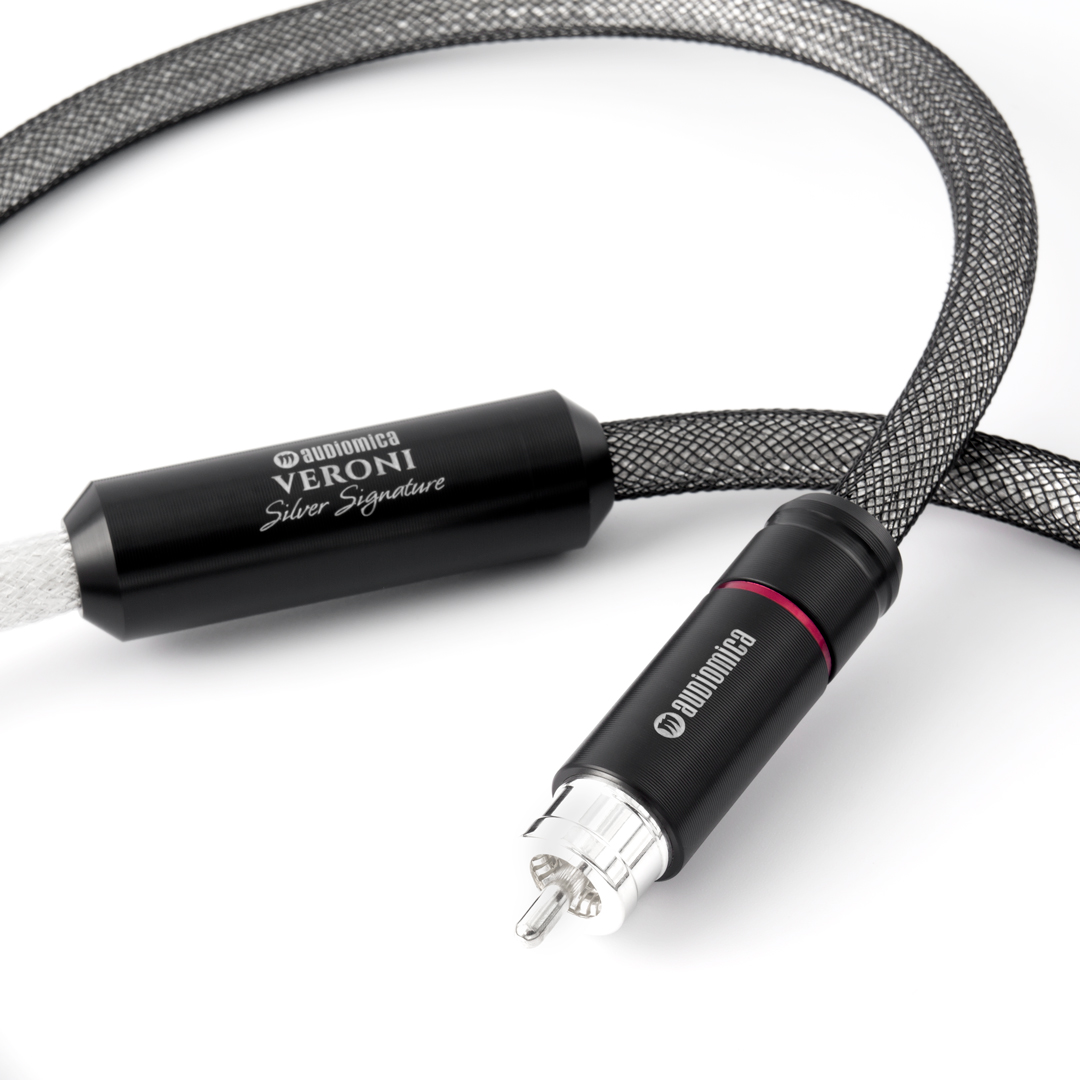
An audio signal is only as strong as its weakest link. After all the meticulous engineering of the conductor and dielectric, the entire performance of a cable can be undone in the last inch—by an inferior plug and a compromised solder joint.
The truth is, all solder joints are poor conductors relative to the wire itself. Most plugs are made of soft metals that can oxidize or deform over time, leading to poor contact pressure and increased resistance. This is where many cables, even expensive ones, fail.
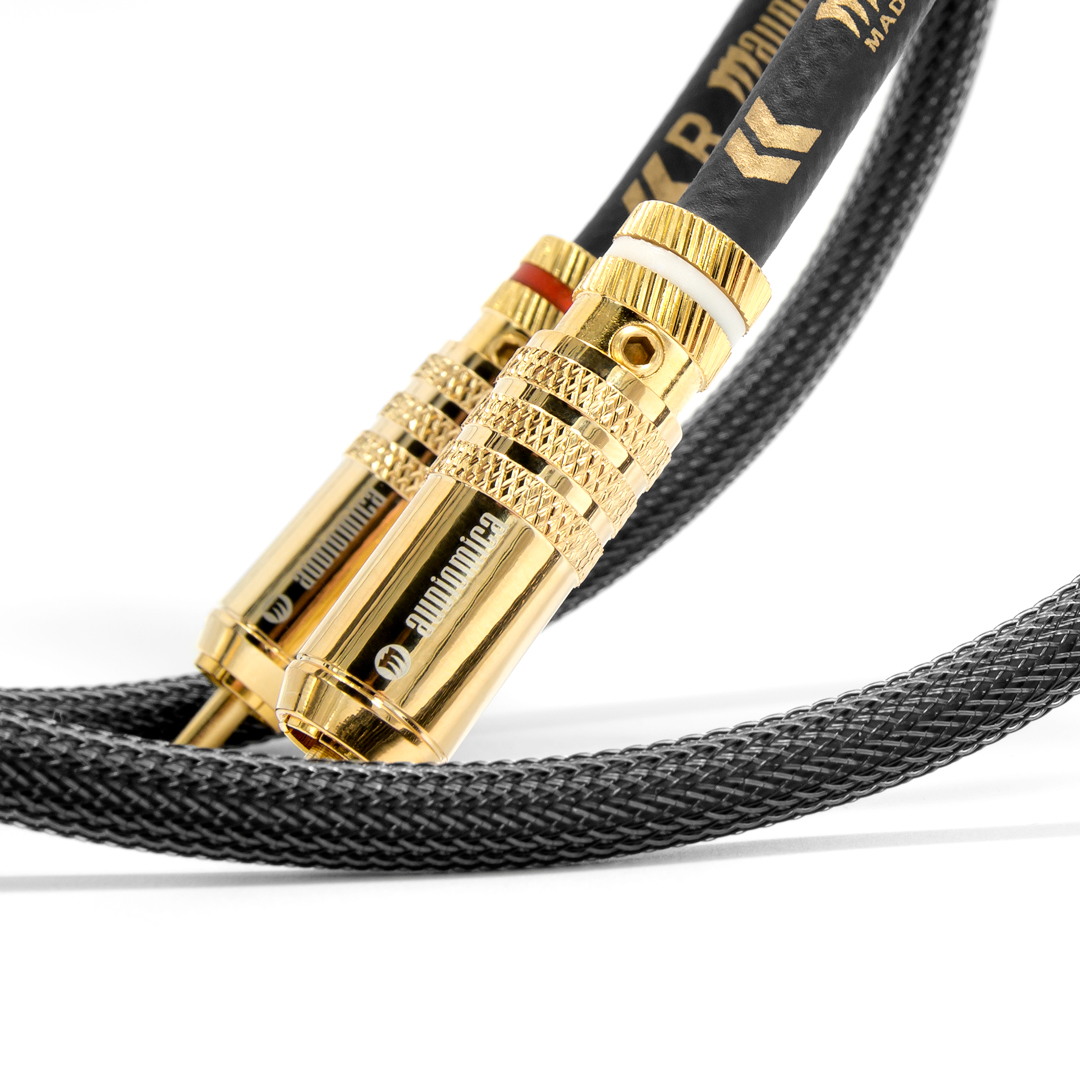
We view termination as an integral part of the cable’s design. Our plugs are machined from superior materials like copper-beryl alloy for its high strength and conductivity. They are then plated with gold, silver, or rhodium using our proprietary DCP process to guarantee a perfect, non-corroding surface. The soldering process itself is optimized, using a precise flux and metallurgy to create a joint that is not only electrically sound but mechanically robust, free of deformations.
Our aim is one and unchanging: to ensure a lossless, mechanically secure, and electrically perfect signal flow from beginning to end.
It is a final, critical guarantee that the performance engineered into the cable is the performance delivered to your system.