

Why we rejected the industry standard for connectors?
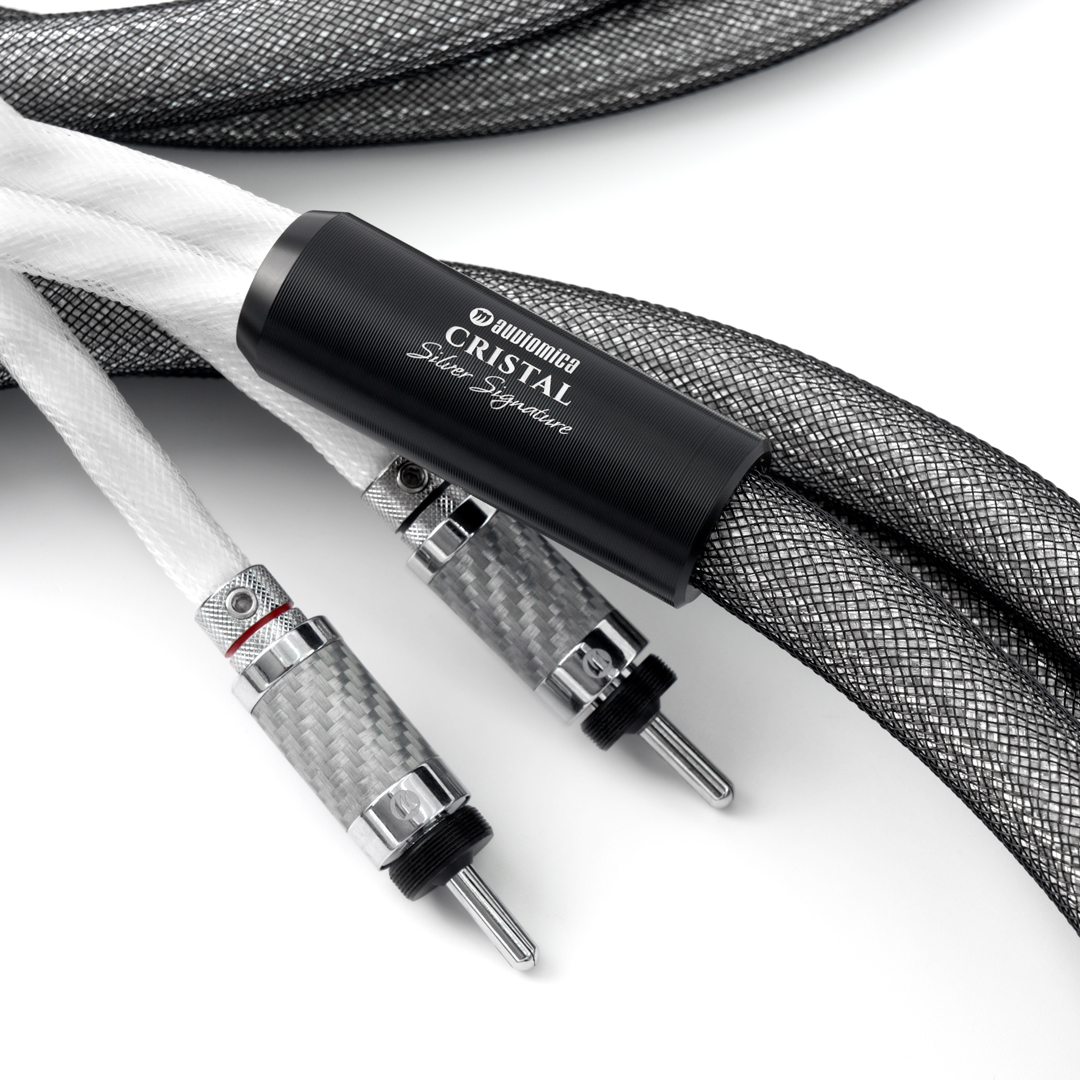
The truth is, most audio connectors are a weak link. We investigated and found that nearly 90% of plugs on the market are plated with an inconsistency that compromises signal integrity.
This is not audiophile lore; it is physics. While low-frequency current flows through the entire conductor, high-frequency current travels not through its core, but along its surface.
The quality of that surface—the plating—is therefore not a detail; it is everything.

Our patented Double Coating Process (DCP) was developed to solve this problem permanently. Where European standards demand 3 microns of plating and Chinese standards often deliver just 1–2, our process applies a flawless, homogeneous coating of up to 20 microns thick.
As the name implies, the coating is applied twice. After the first layer, the component is meticulously cleaned, measured, and only then subjected to the second plating. The process is laborious and expensive, but the result is a connector with electrical and mechanical integrity far superior to any standard method.
It is the only way to guarantee a perfect, stable connection for the life of your cable.
The Fallacy of 'Cosmetic' Shielding

In many audio cables, the screen is little more than decoration—“eye candy” that adds bulk but offers negligible protection from electromagnetic and radio-frequency interference (EMI/RFI).
We consider this an unacceptable compromise. A shield must be engineered, not just applied.

Our journey to perfect shielding began with the DSS (Double Screen System), a technology still successfully employed in our Black, Gray, and Red Series cables. It combines double screening with a multi-wire braid that eradicates the mutual induction of currents, effectively neutralizing interference produced by neighboring wires.
For our most advanced cables, we engineered an even more uncompromising solution.
Our patented Contrary Twisted Braids (CTB) technology is an engineered defense against noise. The system utilizes multiple layers of multi-wire braids, twisted in opposing directions. This geometry creates a shield that actively neutralizes the influence of external electromagnetic fields, preventing them from contaminating the delicate audio signal.
The thickness of each wire, the number of wires per braid, and the precise angle of the twist are not arbitrary. Each configuration is engineered and tested for a specific cable design, ensuring its screening is not just present, but optimized.
The result is a cable where the impact of interference is reduced to zero, or near zero. The result is a soundstage of absolute silence, allowing your music to emerge with stunning clarity, free from the noise that clouds detail and collapses dimensionality.
The Myth of the 'Sound–Dulling' Filter
A popular belief in high-end audio holds that filters are the enemy of dynamics. That they muffle detail and slow down the sound, trading purity for politeness.
We found this to be a fundamental misunderstanding. The real enemy is the pervasive electrical noise—from your power grid, from Wi-Fi, from every modern appliance—that already contaminates your system and masks the music’s true character.
Effective filtering is not an act of subtraction, but of preservation. Its task is to eliminate the high-frequency noise and variable components that ride on the current, creating a stable, silent foundation. This allows the audio signal to pass through without being corrupted. By precisely managing inductance and capacitance, our filters correct the current parameters responsible for the final sound, allowing your components to perform at their absolute peak.
Designed and built entirely in the Audiomica Laboratory, our family of proprietary filters—DFSS (Double Filtering Signal System), TFSS (Triple), and TFCT (Two Filters Current Tension)—function as a complement to the cable’s core structure.
Each filter is a carefully tuned combination of capacity, ripple, and induction elements. Using precisely spaced ferromagnets and premium components, they are engineered to target specific types of interference without impeding the natural flow and energy of the music.
The result is not a sound that is muffled or slow. It is a sound that is focused and pure. By lowering the noise floor, our filters unveil layers of detail and micro-dynamics that were previously obscured. The soundstage gains depth and stability, and instruments acquire a more natural timbre.
We don’t just filter the noise; we liberate the music.
Why Passive Parts Should Be Active

Cable couplers and splitters are typically treated as passive, cosmetic elements—a place to display a logo or add aesthetic flair. But what if these “passive” components were actively harming the signal?
We recognized that standard plastics and polymers used in these parts are insulators that can accumulate and hold electrostatic charges from the surrounding environment—a silent form of distortion.

Even a minuscule electrostatic field can influence the sensitive electrical signal traveling through a conductor. These free-floating charges can cause instability and subtly change the parameters of the transmitted signal, veiling detail and robbing the sound of its immediacy. Protecting the signal from EMI is only half the battle; controlling the electrostatic environment around it is the crucial next step.
During the development of our Acoustic Points accessories, we created a proprietary material to solve this problem: Polacetal POM-C AP50. This is a special polyoxymethylene copolymer engineered to have a low, stable resistance value, both on its surface and internally. This unique property allows it to dissipate electrostatic charges before they can affect the signal. By introducing 10% Teflon (PTFE) into its composition, we also achieved exceptional durability and low friction.
By crafting our Smart Couplers and Splitters from POM-C AP50, we transform passive adornments into active protective components. They no longer simply look good; they work to deliver a better signal. The elimination of micro-charges on the conductor’s background surface results in a profoundly blacker background, allowing the finest nuances of the music to emerge with stunning clarity. It is our philosophy in action: every single element must serve the sound.
Insulation Isn't Just Insulation. It’s Part of the Sound.
Every material that touches a conductor absorbs a portion of its energy, storing and then releasing it back into the signal as distortion. This is the dielectric effect.
While many manufacturers use common PVC for its flexibility and low cost, its poor dielectric properties introduce significant colorations and a loss of transparency.
To us, this is an unacceptable starting point.
The perfect insulator is a vacuum. The next best is air. This is the principle that guides our approach. While a pure air dielectric is not yet practical for flexible cables, we have engineered a method to get remarkably close. The best solid dielectric available is Teflon (FEP), known for its incredible stability and minimal energy absorption. But we knew we could do better.
Our solution is Extruded Teflon. Through a specialized manufacturing process, we introduce countless microscopic air bubbles into the structure of the Teflon insulation. This creates a matrix that is part solid, part air. In practice, the conductor is suspended in a dielectric that behaves far more like pure air than any solid material alone.
This technology allows us to achieve a level of transparency and neutrality that is simply not possible with conventional insulators. By minimizing dielectric distortion at its most fundamental level, the signal remains pure, dynamic, and uncolored. You hear the music exactly as it was intended, without the subtle yet persistent sonic signature of the material that surrounds the wire.