

Should a Headphone Amplifier Use a DAC Line Output, Tape Output or Preamplifier Output?
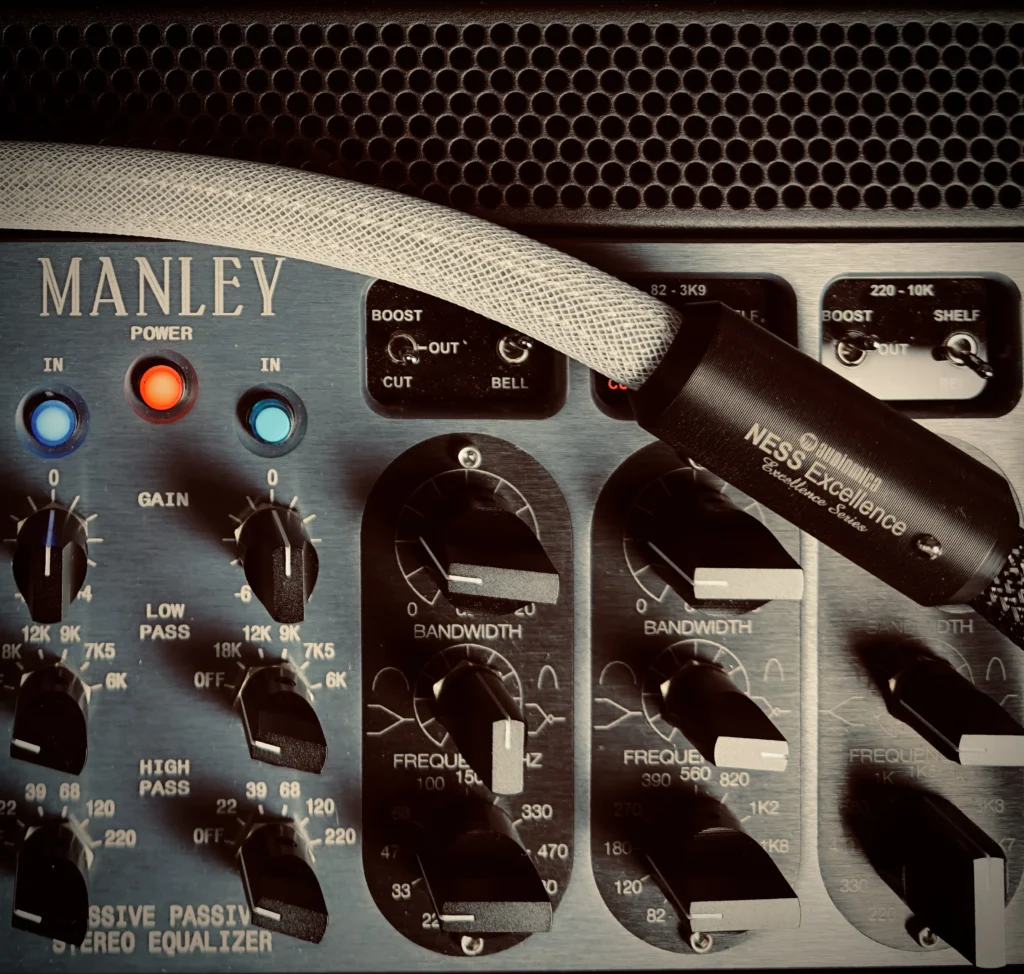
A rear panel may offer three plausible feeds for a headphone amplifier: line out, tape or record out, and pre out. All three carry music, yet the grandest label can still leave out a source, produce an unexpected jump in level or fall silent when you switch off the loudspeakers. The useful question is what the socket does in this system: which programme it carries, which control sets the level, how much signal it delivers and whether it stays live for private listening.
An external headphone amplifier needs an analogue signal and a clear division of duties. A fixed feed is beautifully simple when the headphone amplifier will control volume. A variable feed is equally sensible when you want an upstream remote or one coordinated system volume. Choose the control that will lead everyday listening, then give any second control a deliberate, repeatable purpose.
That is how an old-fashioned tape output can become the elegant choice while a sophisticated preamplifier output becomes the awkward one. A DAC socket that appears fixed may also depend on a menu setting. Read the label as a prompt to check the behaviour, not as the answer.

Who Should Own Volume Control in the Headphone Path?
Volume control ownership starts with the one control you expect to touch every day. With a fixed source output, that control will normally be on the headphone amplifier. With a variable source, the upstream component may take charge while the headphone amplifier stays at a known position or gain setting. Either arrangement can work; trouble begins when it is unclear which knob leads.
Keeping two controls active is not inherently wrong. A DAC volume control can set a ceiling for a sensitive downstream combination. Alternatively, the headphone amplifier can remain at a repeatable setting while an upstream preamplifier provides remote volume. In both cases, the second control has a defined job rather than a position that drifts between listening sessions.
Our preference is straightforward. If the source supplies every required programme at a suitable fixed or locked level, let the headphone amplifier handle normal listening volume. If source selection and remote level already centre on a preamplifier, upstream control may feel more natural. Two knobs need two distinct duties; otherwise changes in gain, startup level or remote operation introduce needless uncertainty.
The engraving cannot settle the choice. Find out what sits after the source selector, what sits after the volume control, and what stays live when you use mute or speaker-off. Those three behaviours show the control logic you will actually live with.
Is the DAC Line Output Really Fixed, Variable or Configurable?
A DAC line output may be fixed, variable or user-configurable. When the DAC is the only digital source and you can lock its output at a suitable level, a direct feed gives the headphone amplifier a clean role. If the system also depends on analogue sources selected elsewhere, the same direct connection may be too narrow, whatever its electrical quality.
The RME ADI-2 DAC FS makes this distinction concrete. Its line output is normally variable, but Lock Volume can hold a chosen output level, and the unit provides multiple hardware reference levels. In other words, the lock holds the control in place while the reference-level choice determines the available output range. A locked output does not imply one universal voltage.
Connector format adds another level question. On the ADI-2 DAC FS, the corresponding balanced XLR reference levels are 6 dB higher than the RCA values. That relationship is specific to this model, not a rule for every RCA and XLR source. Matching sockets do not guarantee matching levels; choose XLR because the endpoints and their operating levels suit one another, not because the connector looks more ambitious.
We favour a DAC connection when it carries every wanted source, offers a documented fixed or safely locked state, matches an analogue input on the headphone amplifier and leaves useful volume travel at an appropriate gain. If any one of those conditions fails, we would reject it. Direct is valuable when the whole source arrangement is genuinely complete, not when the headphone amplifier is being asked to hide a missing source or unsuitable level.
When Is a Tape or Record Output the Cleanest Route?
A tape out to headphone amplifier connection can be the neatest way to keep an integrated amplifier at the centre of source selection while leaving headphone volume downstream. This is particularly useful when the integrated amplifier gathers digital and analogue sources that a DAC-direct feed cannot collect.
The McIntosh C36 shows how much useful control can sit behind an old label. Its RECORD selector determines what reaches Tape 1 and Tape 2 independently of the LISTEN selector used for the main outputs. The tape outputs also sit outside the main volume control and its documented mute action. Headphones and loudspeakers can therefore carry different programmes—a useful feature for some listeners and an unwelcome surprise for others.
Three conditions make this connection work well: every source wanted on headphones must be available to the record selector, the output must remain at a known fixed level, and the loudspeakers must be silenced without removing the headphone feed. When those conditions hold, the fixed level becomes a virtue because the headphone amplifier controls volume without negotiation.
We would leave tape or record out alone if a required source is excluded, record selection is awkward in daily use, or silencing the loudspeakers also interrupts the chosen programme. Another integrated amplifier may behave nothing like the C36. What matters is the genuine independence of its functions, not the word “tape” on the rear panel.
When Does a Preamplifier Output Create More Problems Than It Solves?
The headphone amp line out vs pre out question comes down to where you want control to live. A pre-out is variable by purpose in many systems, so it suits a listener who wants the preamplifier to remain responsible for source selection, remote volume and perhaps balance, while the headphone amplifier provides the final drive.
That convenience depends on a stable relationship between two gain stages. You might leave the headphone amplifier at a known setting and use the preamplifier for daily adjustment. Or you might limit the upstream control to a deliberate range and use the headphone amplifier normally. Either way, startup level and changes between sources must remain predictable, especially with sensitive headphones.
The Marantz MODEL 50 reveals a less obvious dependency. Its PRE OUT level is linked to the speaker A/B volume, and switching speaker output off also removes audio from PRE OUT. This coupling is specific to this model, but it shows why variable level is only half the story: the command that quiets the room may also silence the external headphone amplifier.
Choose pre-out when you genuinely want shared upstream control and the component’s speaker or mute logic keeps the feed alive. Walk away if speaker-off kills it, startup level is hard to predict, or both knobs remain active without a reference position. A pre-out that defeats private listening is wrong for this job, however useful it may be elsewhere.

Will the Loudspeakers Mute Without Cutting the Headphone Feed?
The system’s speaker muting behavior is separate from whether the headphone feed is fixed or variable. A fixed record output may stay live through mute, while a variable pre-out may disappear when speaker output is disabled. The label alone promises neither outcome.
Private listening has a simple requirement: music must reach the headphone amplifier while the loudspeakers remain silent. That silence might come from the integrated amplifier, a speaker selector, a power-amplifier control or another established part of the system. The feed and the speaker state must remain independent; a feed that vanishes with the loudspeakers cannot serve the same evening-listening purpose.
The contrast between the C36 and MODEL 50 is useful without creating a universal tape-versus-pre rule. One documented record output remains outside mute. One documented pre-out depends on speaker output being enabled. Familiar sockets can hide very different relationships between listening and recording functions.
Test a new connection quietly while watching the whole system, not just the headphones. Try a second source you expect to use, apply the normal speaker-silencing command, and return every control to its intended starting position. The revealing moment comes when the room goes quiet: if the headphone feed disappears as well, choose another output.
How Should Output Level, Gain and Connectors Be Checked Before Listening?
The selected headphone amplifier gain determines whether a valid source level feels composed or abrupt at the volume control, but input compatibility comes first. The source must be able to drive the analogue input, the input must present an appropriate load, and the signal must stay within that input’s documented accepted level. Selectable gain controls how much amplification follows the input. If overload happens before the gain stage, lowering gain can reduce the final volume, but it cannot restore the input-stage headroom already lost.
Schiit’s Magni Unity provides a concrete example of downstream flexibility: its specified input is 50 kohm, with gain choices of -10 dB, 0 dB and 15 dB. The 50 kohm figure is the load presented to the source; the gain settings shape what happens after the input. These numbers belong to this amplifier. Our general preference is the lowest gain that still provides the required level and headroom.
Loading changes when one source output feeds more than one connected input. Those inputs create a combined electrical demand rather than the original single-input case. Treat a shared output as its own source-to-load interface and check it in the component documentation.
Once input compatibility is established, too much source level or gain tends to crowd normal listening into the first part of the volume control, where tiny movements make too much difference. Too little can leave the amplifier close to its limit. Source-level or gain configuration can often improve awkwardly compressed knob travel, but an unverified or overloaded input remains a reason to stop even when the headphones sound quiet. Listening level cannot tell you where overload is occurring.
RCA and XLR are electrical interfaces as well as plug shapes. Both endpoints must provide the intended analogue line-level connection, and an XLR socket by itself proves neither balanced operation nor a familiar voltage. Choose the signal role before the connector prestige. Our guide to why an interconnect belongs on a line-level route explains the difference between low-level interconnects and speaker-level cable roles.
For the first listen, turn the headphone amplifier down before activating the source. Select the lowest suitable gain and keep the headphones off your head until the connection behaves as expected. Establish which control changes level, whether the selected source is present and what happens to the loudspeakers, then raise the level gradually. This is a short commissioning step, not an evening ritual.
Which Route Fits Your System, and When Should You Reject It?
To connect headphone amp to DAC or preamp with confidence, establish four facts about everyday use: which sources reach the output, who controls volume, what happens to the loudspeakers, and whether the level and connector format suit the headphone amplifier. Hearing music is encouraging, but it does not resolve uncertainty about any of those four.
A fixed or locked DAC feed is our natural default when the DAC gathers every desired source and the headphone amplifier should be the sole listening controller. The pleasure is a short chain whose duties are obvious. Reject the DAC connection if sources are missing or its output conditions are unsuitable, not because of a general belief that a preamplifier must be better.
When the integrated amplifier is the real source hub, tape or record out can pass every required programme while the headphone amplifier receives a fixed feed. Independent programme selection can be genuinely useful when it matches the listener’s habits, although selecting the source and silencing the speakers may then involve separate controls.
A pre-out belongs when upstream source and volume control are features you want, including remote operation or continuity with the loudspeaker system. The price is coordinated gain and possible coupling to speaker commands. It fails when speaker-off removes the feed or when the two volume controls have no stable relationship, even if audio passes in other circumstances.
Consider cable length and RCA or XLR configuration after those behaviours are understood. The best connection becomes forgettable in daily use because every control already has a clear duty; the cable can then refine a stable system instead of distracting from uncertain control.
When Is RHOD Reference Worth Comparing in Your Headphone Connection?
An analog interconnect for headphone amplifier use has one precise purpose in this system: carrying the stereo line-level signal from the chosen source output to the amplifier’s analogue input. RHOD Reference is made for that passive connection between matching line-level endpoints. It cannot change source selection, volume control, mute logic or gain.
RHOD is our Reference Series analogue interconnect in PRELUDE Class, available with RCA or XLR plugs in six configurations and selectable lengths. Let the two sockets and the distance between them define the finished cable, whether that means RCA to RCA, XLR to XLR or another available arrangement supported by both components.
Compatibility begins the comparison; construction gives you the next set of reasons to consider it. RHOD uses 6N OFC conductors, a copper-braid screen, 2 × 0.81 mm wire diameter, 2 × 0.51 mm² cross-section and an approximate cable diameter of 8.5 mm. These are specific conductor and screening choices, not decorative adjectives.
We give that construction its mechanical finish with AML-ACP-RCA01 Au or AML-XLR10 Au connectors and hand-terminate every cable. The RCA has a split pin and screw casing; the XLR has a metal non-magnetic body. Both connector surfaces use 24-carat gold and DCP processing. Conductor, screen and plugs arrive as one completed assembly for the listener to compare.
The installation can be tailored instead of improvised. Standard ordering runs from 1 m to 5 m in half-metre steps, and other requested lengths, antistatic couplers and DFSS Premium or TFSS Luxury versions are also available. We offer DFSS and TFSS to reduce or block externally coupled electromagnetic interference, while the intended benefits of the gold-plated DCP surfaces are conductivity and durability. Choose length, filtering approach and contact finish for the actual installation, not from habit.
Provenance matters to us because the finished interconnect is more than a list of raw materials. We hand-make every RHOD and make its finishing details traceable through a signed box, a certificate of authenticity, a unique product code and personal quality assurance. For listeners who care how a cable is made as well as how it connects, those details make consistency of construction tangible.
We associate RHOD with sharpness, dimensionality, dynamics, clarity, tangible stage and space, pace and flow, and improved bass control. We use those descriptions as focused questions for a careful comparison: at sensible levels, does this candidate preserve rhythmic shape, spatial relationships and bass articulation in this particular headphone system? The answer belongs to the listener and the system.
For a functioning headphone system that accepts one of its available terminations and lengths, we recommend comparing the RHOD Reference analogue interconnect for its 6N OFC conductors, copper-braid screen, connector construction, ordering flexibility and signed provenance. Listen at sensible levels for rhythmic shape, spatial relationships and bass articulation. RHOD is a positive refinement choice for a system that already works correctly; it cannot repair the wrong source behaviour.
Continue reading

Should a DAC Drive a Power Amplifier Directly or Through a Preamplifier?

OCC Copper, OFC Copper, or Silver? Which Conductor Material Should You Choose for Audio Cables?
